Water in Plastic Bottles — Why Is It Harmful?
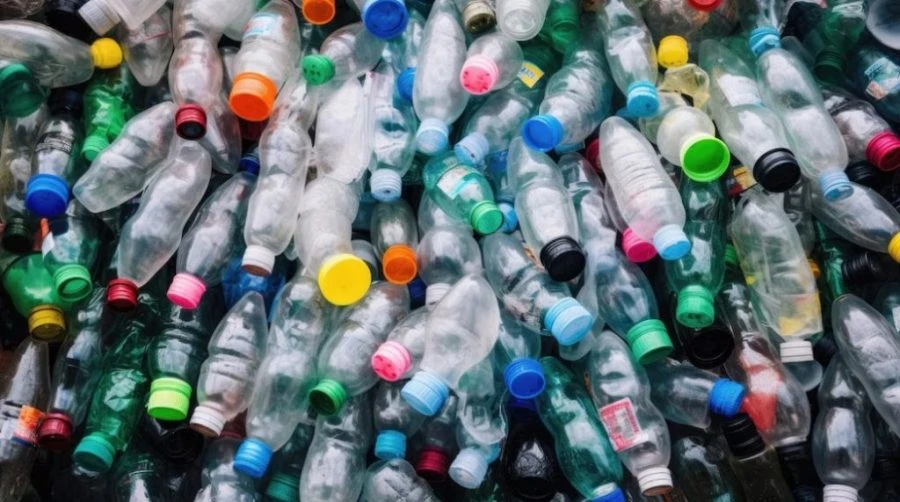
You have probably been hearing more and more about microplastics in recent years, and extensive research has led scientists to repeatedly prove that drinking water from plastic bottles is harmful.
But what are microplastics? Microplastics are tiny fragments of plastic that can be found from the depths of the oceans all the way to the air we breathe. Microplastics are everywhere, and that is precisely why they are a problem.
These microscopic pieces of plastic not only contaminate the land, water and air — they also end up inside our bodies. Here we will explore where microplastics come from, why they are harmful to people and the environment, and how you can reduce microplastic contamination in your everyday life.
What Are Microplastics?
Scientists first discovered tiny pieces of plastic in the oceans in the 1970s, but the term "microplastics" was not coined until 2004. Microplastics are tiny plastic particles smaller than five millimetres in size and come in a variety of forms.
Larger plastic objects — such as bottles, bags and packaging materials — gradually fragment into smaller and smaller pieces over time, eventually becoming microplastics. From there, they can break down further into dust that is impossible to remove from the environment. The ultra-fine particles that make up this dust are called nanoplastics.
Because of their small size, microplastics can easily be distributed through the air and into water.
Where Do Microplastics Come From?
Humanity has produced more than 8.4 billion tonnes of plastic over the last 60 years for a variety of applications, and the vast majority of it has never been recycled. Once this plastic has served its purpose and is discarded, it often ends up in landfills or in the ocean, where it breaks down into smaller particles.
Microplastics in Drinking Water
From plastic bags to single-use bottles to food containers, plastic enters our water sources every day through litter, irresponsible waste management, wastewater runoff and much more.
According to the National Oceanic and Atmospheric Administration, more than eight million tonnes of discarded plastic make their way into our waterways every year. Much plastic floats, meaning that as it breaks down over time it goes directly into our water.
How Much Plastic Do We Actually Consume?
In 2019, a study was conducted by the University of Newcastle, Australia, to find out how much microplastic people actually consume.
Their findings showed that through ingestion, people consume approximately five grams of plastic every week — the equivalent weight of a plastic credit card.
This shocking amount may even be an underestimate, since the study could not track the nanoplastics we inhale and ingest.
The Health Effects of Microplastics
The health effects of microplastics have emerged as a growing concern.
While the full extent of their impact on human health is still under investigation, several potential health risks have been identified.
First, ingested microplastics can accumulate in the gastrointestinal tract, potentially causing physical irritation, inflammation or damage to the intestinal lining.
In addition, there is evidence suggesting that these tiny particles may act as carriers of harmful chemical pollutants, such as heavy metals and endocrine-disrupting chemicals. When microplastics are ingested, these pollutants can leach into the body, potentially causing serious health problems.
Research on Water in Plastic Bottles
In a study at the State University of New York in which 18 bottled water products were tested, nearly 25,000 chemicals were found in the bottled water.
Among them were endocrine-disrupting chemicals such as BPA, which negatively affect human health.
Regulation of bottled water for E. coli subsequently began, and studies discovered samples of bottled water that also contained mould, benzene, microbes and, in some cases, arsenic.
Symptoms of E. coli exposure include gastrointestinal problems, vomiting, diarrhoea, as well as headaches and fatigue.
Mould causes several health problems, including coughing, throat and eye irritation, as well as allergic reactions that can affect the respiratory system, trigger asthma and lead to other conditions related to the immune system.
Benzene is classified as a human carcinogen and has a long-term effect on the blood.
Ultimately it can cause a reduction in red blood cells, negatively affect the immune system, and at high levels can cause vomiting, dizziness and a rapid pulse.
The effects of plastic containers on health are the result of exposure to any mixture of toxins and chemicals and include a range of symptoms and conditions.
Even in trace amounts it can affect the body, and the effects can worsen over time.
In addition to the toxic chemicals found in plastic water bottles, a quarter of tap water is not safe to drink because it does not meet EPA standards.
The New York study also showed that there are excessive levels of microplastics in bottled water, particularly in popular brands.
Microplastics are small pieces of plastic residue measuring 5 millimetres or less. Microplastics are found in over 93% of bottled water.
What You Should Know If You Often Drink Water from a Plastic Bottle
According to the Thomson Reuters Foundation, the average person ingests around 20 kilograms of plastic into their body over the course of their lifetime.
Of course, nobody is actually eating plastic. At least not consciously.
Microplastics are made up of tiny micro-particles found in plastic bottles.
According to the World Health Organization and the non-profit journalism organisation Orb Media, plastic water bottles may contain the highest concentration of microplastics compared to other beverages, Business Insider reported.
Recent reports from Harvard, the Chicago School of Public Health and other medical and scientific institutions have also found that certain chemicals in plastic — such as phthalates and bisphenol A — can act as toxins in the body and have been linked to certain types of cancer, such as breast cancer and liver cancer.
Reusing the Same Plastic Bottle — Safe or Not?
Most of us refill already-used plastic bottles with drinking water without a second thought.
But is that good for us?
We are increasingly trying to protect the environment and reuse the same bottle multiple times, yet we do not stop to consider how much harm we are doing to our health.
Experts also warn that reusing plastic bottles repeatedly is harmful to our bodies.
And that is because of bisphenol A, commonly known by the abbreviation BPA.
This is a chemical substance used in the manufacture of plastic items, including the plastic bottles we use on a daily basis.
This compound can easily leach from the packaging into the water we drink and encourage rapid bacterial growth, which can put our health at risk.
For this very reason, experts also advise avoiding drinking liquids through plastic straws.
-Even products labelled as BPA-free are not entirely safe to use, because a substitute ingredient is used in place of BPA that can compromise health in exactly the same way — says Kent Atherton, CEO of Bloc Enterprises.
What Is the Good News, Then?
You can rid yourself of microplastic contamination in your drinking water once and for all by using a home filter such as the Spar Aqua Pro or Spar Aqua Pro Minerals — both systems are certified to filter out microplastics.
With a single Spar Aqua system you can replace approximately 15,000 single-use plastic water bottles, while drinking healthy, clean water in unlimited quantities in your own home.
If you were to calculate how much money you spend monthly and annually on water in plastic bottles and compare that to the investment in a Spar Aqua Pro system, you would find that you are paying at least 3 times more — only to end up with water trapped in harmful plastic.
With the Spar Aqua system all chemicals are removed after water filtration, and beneficial minerals such as calcium and magnesium are added back, leaving you with delicious, clean and unlimited drinking water that you can enjoy at home and store in larger quantities in glass bottles.
Choosing Spar Company for clean and healthy alkaline drinking water is not just a decision for today — it is an investment for the next 10–20 years.
Our motto is: clean water — a healthy future.
Contact us for any information: 076 676 819 and 070 755 190