How to Choose the Best Water Filter for Your Home?
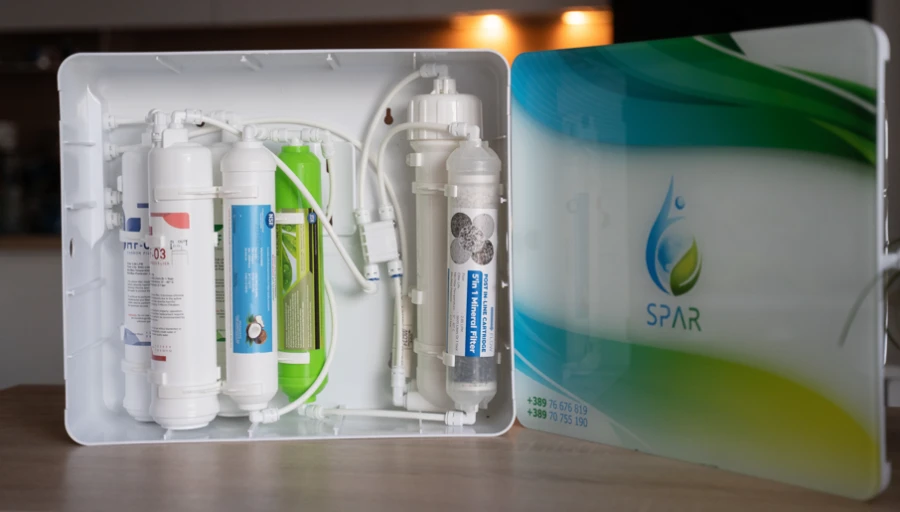
What types of water filters exist and which is most suitable for your household?
There are various types of water filters, each with its own advantages and disadvantages.
Choosing the most suitable filter for your household depends on your water quality, your family's needs, and your budget. Here are some of the most common types of water filters:
1. Mechanical filters: These filters use physical barriers to remove insoluble particles such as sand, silt, and rust. They are ideal for initial, "coarse" water purification and are often used as the first stage in multi-stage filtration systems. Mechanical filters do not remove chemical contaminants or microorganisms.
2. Sorption filters: These filters most commonly use activated carbon to absorb chemical compounds, unpleasant odors, and tastes.
They are effective at removing chlorine, pesticides, and organic contaminants, but are not effective against heavy metals or microorganisms.
3. Membrane filters: These filters use semi-permeable membranes to remove dissolved salts, heavy metals, and microorganisms. Reverse osmosis systems are the most well-known example of membrane filters. They provide a high degree of purification.
4. UV (ultraviolet) filters: These filters use ultraviolet light to destroy bacteria, viruses, and other microorganisms. They do not remove chemical contaminants or insoluble particles, so they are often used in combination with other types of filters.
5. Ion exchangers: These systems use resins to replace unwanted ions in the water, such as calcium and magnesium, with sodium or potassium ions. They are effective for water softening, but do not remove organic contaminants or microorganisms.
How to choose the most suitable filter for your household:
- Analyse your water quality: Have your water tested to determine which contaminants are present. This will help you decide which type of filter is most appropriate.
- Identify your needs: Think about the amount of water you use daily and the specific needs of your family.
- Consider your budget: Filter prices vary considerably.
While some systems are cheaper to install, they may have higher long-term maintenance costs.
- Research maintenance options: Some filters require regular replacement of components or cleaning.
Make sure you are prepared for the required maintenance.
Choosing the right water filter is essential to ensuring safe and clean water for your household. You can consult with professionals from our company and carry out thorough research before making a decision.
How to identify the quality of water in your home before choosing a filter?
The quality of the water you use every day can vary significantly depending on the source, infrastructure, and contamination. Before choosing a suitable filter, you need to analyse the water quality in your home.
1. Visual indicators The first thing you should do is observe the water coming from your taps. If it is cloudy or has reddish or brownish particles, this may indicate the presence of rust or sediment from old pipes.
The presence of greenish deposits on taps can be a sign of elevated copper content.
2. Smell and taste Water should be odourless and neutral in taste. If you notice a chlorine smell, this means there are residues from the disinfection process. A metallic taste may indicate elevated levels of iron or copper, while an odour of rotten eggs suggests the presence of sulphides.
3. Testing the pH value Water with a very low or very high pH can cause pipe corrosion and damage to household appliances. The optimal pH range for drinking water is between 7.5 and 8.5. A low pH can indicate acidic water, which may contain dissolved heavy metals, while overly alkaline water can have a bitter taste.
4. Laboratory tests The most reliable way to find out what your water really contains is to carry out laboratory testing. These tests will show you exact values for the presence of heavy metals, bacteria, pesticides, nitrates, and other potential contaminants.
5. Home test kits If you want a quick analysis, there are available home test kits that can give you a basic indication of pH value, water hardness, and the presence of certain contaminants. Although not as precise as laboratory analyses, they can help you with an initial assessment.
Once you have reviewed all these factors, you will have a clearer picture of your home's water quality and will be able to choose a filter that best suits your needs.
What you need to know about the capacity and longevity of water filters?
The capacity and longevity of water filters are key factors that affect their efficiency and cost-effectiveness.
Every filter has a limited purification capacity, referring to the amount of water it can process before it needs to be replaced or cleaned.
This capacity is most commonly expressed in litres or months of use, depending on the model and type of filtration.
Mechanical filters, which remove coarse particles such as sand and rust, typically have a longer lifespan, but may become clogged more quickly if the water is heavily contaminated.
Activated carbon, used for absorbing chemical compounds, has a limited capacity and must be regularly replaced to remain effective.
Membrane filters, such as those in reverse osmosis systems, can have a greater capacity, but are replaced on a shorter cycle.
To extend the lifespan of the filter, it is important to follow the manufacturer's recommendations and regularly check its condition.
Some systems have indicators that show when it is time for replacement. Ignoring these recommendations can lead to reduced efficiency, the growth of bacteria, and a deterioration in water quality.
Therefore, proper use and timely replacement are essential to ensuring safe and clean water.
How to maintain your water filter for maximum efficiency and longevity?
Proper maintenance of your water filter is essential to its efficiency and longevity. Without regular cleaning and timely replacement of parts, filtration quality can decrease, leading to potentially unsafe drinking water.
Here are some tips for optimal maintenance.
1. Follow the manufacturer's recommendations
Each type of filter has its own lifespan and specific maintenance instructions. Check the instruction manual and follow the recommendations for cleaning and replacement.
2. Regularly replace filter cartridges
We generally recommend replacing filters every 10–12 months, depending on where you live. If you notice a reduced water flow or a change in taste, that may be a sign that it is time for replacement.
3. Clean the system components
The build-up of bacteria and sediment can reduce filtration efficiency.
Tanks, taps, and other parts should be regularly rinsed with a mild mixture of vinegar and water or a suitable cleaner recommended by the manufacturer.
4. Check the water pressure
Some systems, such as reverse osmosis, require adequate pressure for proper operation. Low pressure can reduce efficiency, while excessively high pressure can damage the filter.
5. Avoid exposure to direct sunlight and extreme temperatures
Filter systems should be kept in a dry and cool place, as heat and sunlight can encourage the growth of bacteria within the system. This is also why we generally recommend installing them in the kitchen in the lower cabinet section.
With regular maintenance, your water filter will remain effective and will provide you with clean and safe drinking water for a longer period.
For any questions, information, or booking enquiries, write to us or contact our responsible representatives.