Bottled Water: The Greatest Scam in Human History
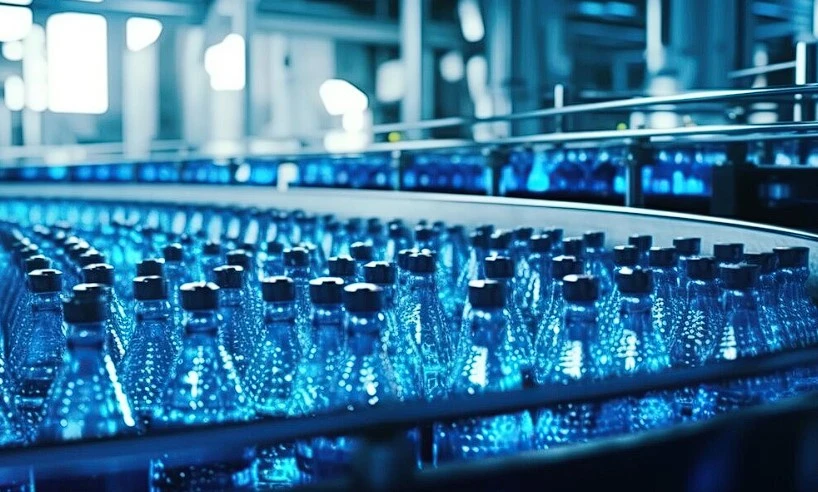
How Did Water Become a Luxury?
At a time when staying hydrated is a basic necessity, bottled water has managed to become a symbol of prestige and the "healthy lifestyle." In just a few decades, we have gone from people simply drinking tap water at home — something entirely ordinary — to a world where people pay thousands of denars a year for a bottle of water that is, at its core… no different from what comes out of the tap. Why did this happen?
The shift begins with perception. For years, bottled water was served up to us as "cleaner," "safer," or "more natural." Advertisements featuring snowy mountains, pristine springs, and people jogging through nature convinced us that bottled water is superior. But the reality is quite different.
In this article, we will examine why bottled water is so ubiquitous, what its true costs are — not only financial but also environmental — and what we can do as responsible consumers. Most importantly, we will talk about how to replace this habit with something more sustainable and smarter, without sacrificing convenience or quality.
The History of Bottled Water
Bottled water may seem like a modern product, but its roots run deep in history. The earliest documented cases of commercial bottled water sales date back to the 18th century, when mineral water from natural springs was sold in glass bottles as "medicinal water." People believed these waters had the power to heal or cleanse the body, so they were purchased as part of health treatments — especially at spa and bathing resorts.
However, the mass popularity of bottled water did not truly begin until the 20th century. With improvements in packaging and transportation technology, along with the growth of marketing as an industry, several major brands began building entire business empires on the idea that bottled water is "better."
In the 1970s and 1980s, brands such as Evian and Perrier launched aggressive campaigns in Western countries — particularly in the United States, and later across Europe.
These brands accomplished something remarkable: they turned a common, public resource into a luxury product. Rather than selling water as a food or basic necessity, it began to be packaged as a lifestyle. Marketing transformed bottled water into part of a cultural trend — something you carry in your hand while working out, travelling, or even sitting in a café. From "mineral medicinal water" it evolved into "a healthy drink for the urban person."
Today, most of the largest bottled water brands are owned by multinational corporations that sell billions of litres every year. But the question remains — are we truly buying something better, or are we simply paying for an image that someone cleverly sold us?
The Marketing Behind Bottled Water
Bottled water is not sold because of thirst — it is sold because of image. In one of the most successful marketing feats of modern times, companies managed to brand the most basic and most accessible resource as a premium product. The way bottled water is advertised plays on the deepest human instincts: the need for purity, health, and belonging.
If we look carefully, we see that almost all bottled water advertisements follow a similar pattern — untouched nature, snowy peaks, crystal-clear springs, athletic bodies, and happy faces. The goal is simple: to convince you that this water is associated with a "higher" value — that you are getting it from some special, almost mystical place, and that you have made a "smart choice" that sets you apart from others. This is emotional marketing, not informational.
But the reality is often far from this image. A large proportion of bottled water originates from the same sources as tap water — industrially processed, filtered, then packaged and branded with impressive-sounding names. In some countries, companies even use public water supply systems, for which they pay token fees, and then resell the water at a price thousands of times higher than its actual value.
Furthermore, many brands also use status psychology: if you drink from a certain bottle, it makes you "conscious," "elegant," or "premium." Meanwhile, nowhere does it say that the water itself is actually any different. They are selling not a substance, but an idea. And that idea — unfortunately — costs dearly, both at the individual and societal level.
Economic and Environmental Aspects
When we compare what we receive with what we pay for bottled water, it becomes clear that we are dealing with a massive economic imbalance. On average, a bottle of water costs 30–40 denars, while one litre of tap water — even filtered — costs only a few denars. In some countries, the price of bottled water is up to 2,000 times higher than the price of tap water. In other words, we are not paying for quality — we are paying for packaging, transportation, and marketing.
This economic absurdity takes on an even deeper dimension when one considers the fact that many producers pay a token price for access to water resources and then sell the water at enormous margins. The profits are not reinvested in the communities they supply with water, but end up in the pockets of corporations. Meanwhile, consumers are under the illusion that they are making a "more natural" choice.
But the economic damage is nothing compared to the environmental damage.
The plastic bottles used for packaging water are among the greatest pollutants on the planet. Billions of bottles are produced every year, of which only a small fraction are recycled. The rest end up in landfills, rivers, seas, and oceans, where they break down over centuries. In the process, they create microplastics that enter the environment, our food and water, and ultimately our bodies.
In addition, the production and transportation of bottled water consumes enormous amounts of energy and fossil fuels. Transporting water from a factory to a supermarket, and then to your home, means that resources are expended for every litre of water — resources that would be unnecessary if we used local water.
Bottled water, when viewed on a global scale, is not merely a financial loss — it is an environmental catastrophe that repeats itself every day, billions of times over.
The Solution: How to Free Ourselves from Bottled Water?
If what is written above makes sense to you, if you are tired of paying a high price for something that should be freely accessible, if you are concerned about the amount of plastic we consume every day, or if you simply want to make a smart move for your home — then it is time for a real solution.
We believe that every home deserves safe, clean, and affordable water, without plastic and without unnecessary expense. That is why we recommend the Aqua Glass filtered water system — a simple, efficient system that is installed and connected to the water supply network and filters the water, giving you clean, filtered water of far higher quality than water that has been sitting in plastic for months.
With Aqua Glass:
- You get high-quality filtered water — always at hand.
- Forget about buying and lugging bottles from the supermarket.
- You save a significant sum of money every month.
- You reduce your plastic consumption and waste.
- You invest in a long-term solution that pays for itself from the very first month.
Aqua Glass is not just a filter — it is a small revolution in the way we think about water. It is available in a modern design that suits any kitchen. Installation is straightforward, and maintenance is minimal.
Do not pay 100 times more than water's real value. Do not create plastic waste that will last hundreds of years. Make the smart choice today.
For enquiries and orders, contact us: 076 676 819 and 070 755 190